How to Make Apple Juice with Fresh Apples
You want fresh, bright apple juice made from whole apples—no concentrate, no mystery. This guide walks you through the exact steps so you get clear, flavorful juice at home.
You’ll learn the easiest methods, the tools to use, and the small timing and temperature cues that make a big difference.
Follow each step and you’ll have fresh apple juice ready to chill or bottle.
How to Make Apple Juice with Fresh Apples
You’ll make fresh-pressed apple juice: bright, slightly sweet, with a clean apple aroma. The final juice can be clear or slightly pulpy depending on how you strain it.
Expect a light golden color, fresh apple flavor, and juice you can drink immediately or gently heat-treat for longer storage.
Ingredients
- 4–5 pounds (≈2 kg) fresh apples — mixed sweet-tart varieties give best flavor (see section below).
- 1 tablespoon lemon juice (optional) — prevents browning, brightens flavor.
- 1–2 tablespoons granulated sugar or honey (optional) — only if apples are very tart.
- Cold water (optional) — a few tablespoons to help blender method.
- Ice and refrigeration for serving.
Tools: juicer or blender, fine-mesh sieve or cheesecloth, large bowl, cutting board, knife, clear pitcher, cooking thermometer (if pasteurizing), sterilized jars for storage.
Step-By-Step Instructions
Prepare and Wash the Apples
Rinse apples under cold running water to remove dirt and wax. Remove stems and any bruised spots; you don’t need to peel them—skins add flavor and color.
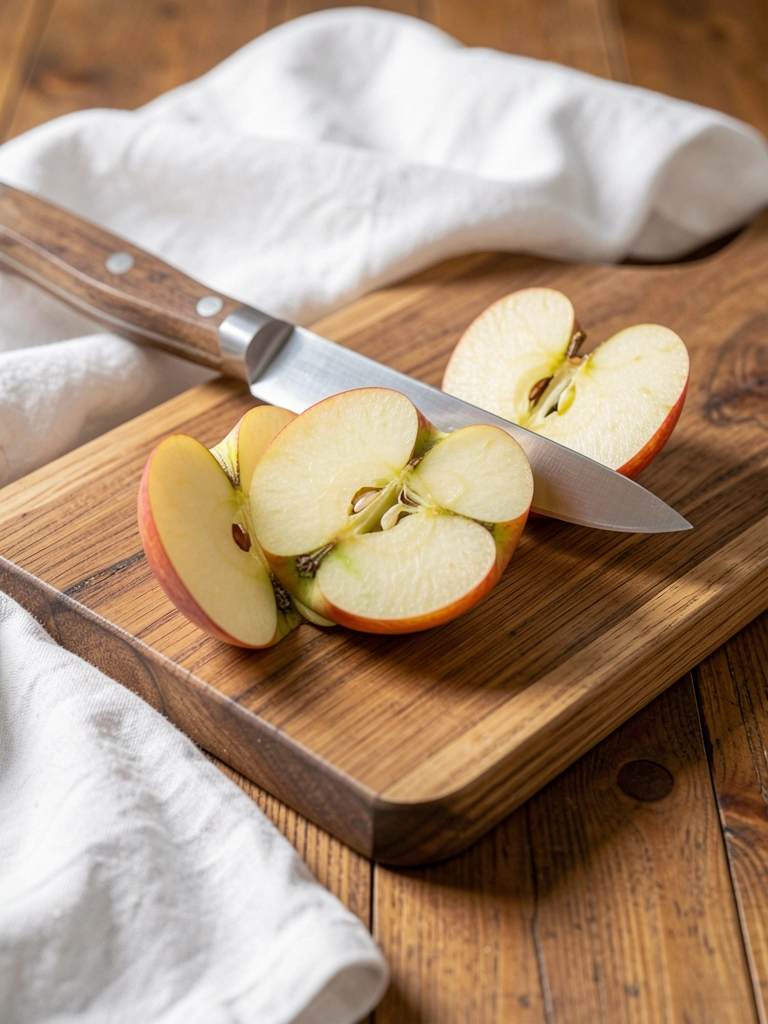
Cut apples into quarters and remove large seeds and stems. Smaller seeds can be left; they won’t affect flavor but avoid leaving bitter cores.
Choose Your Extraction Method
If you have a juicer: feed apple quarters through a centrifugal or masticating juicer. This gives clear, quick juice with minimal handling. Expect 6–8 cups from 4–5 pounds.
If you don’t have a juicer: chop apples and blend in batches with a few tablespoons of water until pulpy. Use a high-speed blender for 30–60 seconds per batch.
Strain the Juice
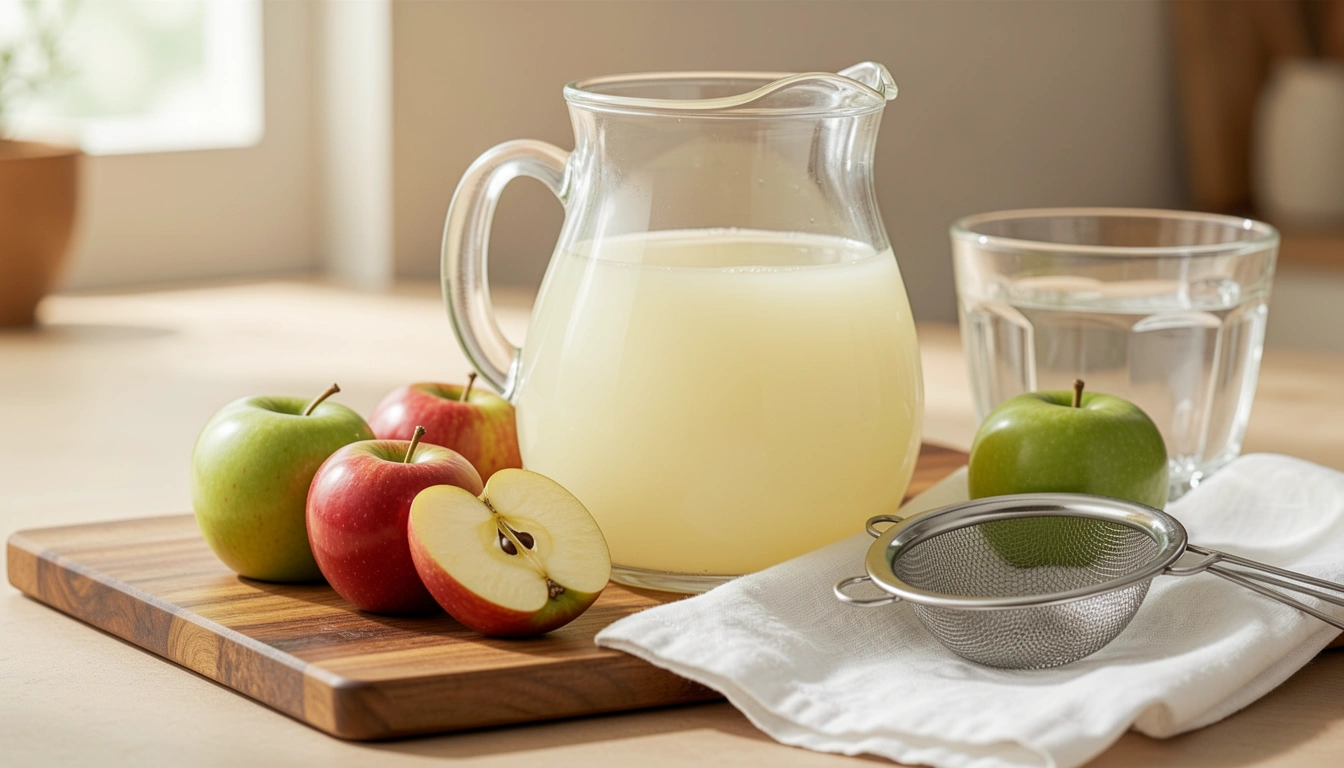
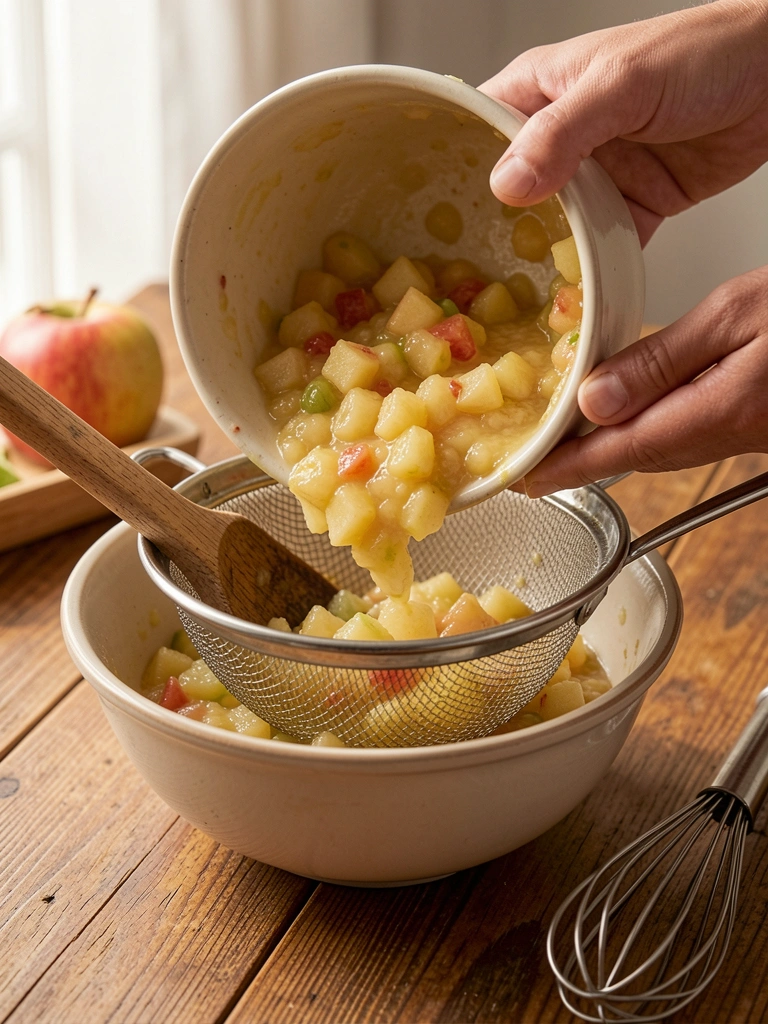
Pour juice or blended pulp into a fine-mesh sieve lined with cheesecloth over a bowl. Let it drip 10–20 minutes, then press firmly with a spatula for extra yield. For clearer juice, chill briefly and skim foam before straining.
You’ll know it’s done when the liquid runs clear and pulp remains in the cloth. This step controls texture and clarity.
Adjust Flavor and Sweetness
Taste the juice cold. Add 1 tablespoon lemon juice if it tastes flat or to preserve color. Sweeten with 1–2 tablespoons sugar or honey only if needed; stir to dissolve.
Cold tasting is the best indicator—flavors pop when chilled.
Optional Heat-Treat for Storage
To store longer, heat juice to 160°F (71°C) and hold for 1 minute, then hot-fill into sterilized jars. Do not boil—boiling blunts fresh flavor. Cooling quickly and refrigerating prevents fermentation.
Use a thermometer and clean jars for safe storage.
Chill and Serve
Cool juice in the refrigerator for at least 1–2 hours. Serve over ice or chilled in a glass. Fresh apple juice is best within 3–5 days refrigerated; see storage section for freezing and longer options.
Best Apples to Use
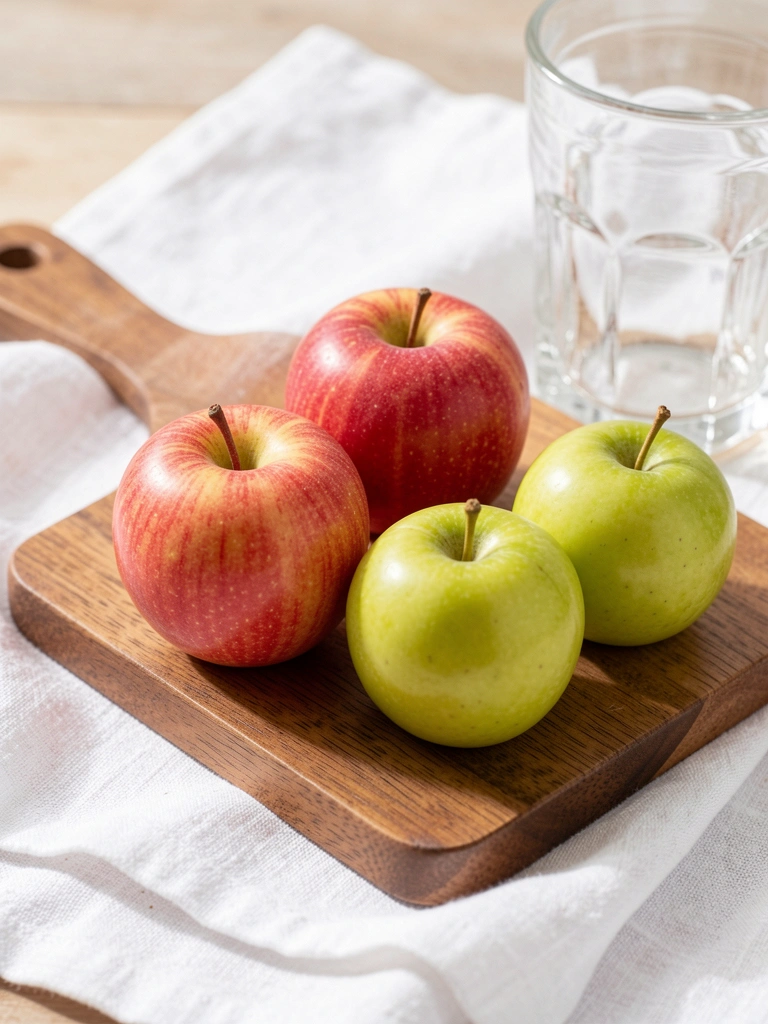
Different apples change the flavor. Use a mix for complexity: sweet (Fuji, Gala), sweet-crisp (Honeycrisp), and tart (Granny Smith). Blending varieties balances sugar and acidity.
Avoid mealy or overly bruised apples; they give flat juice. Fresher apples yield brighter juice and better yield.
If you want very sweet juice, favor sweeter varieties. For tangy juice, use more tart apples. Experiment with a 60/40 sweet-to-tart ratio.
How to Strain for Clear Juice or Pulpy Juice
For pulpy juice: press the blended mix once through a coarse sieve and keep some pulp. This keeps body and fiber.
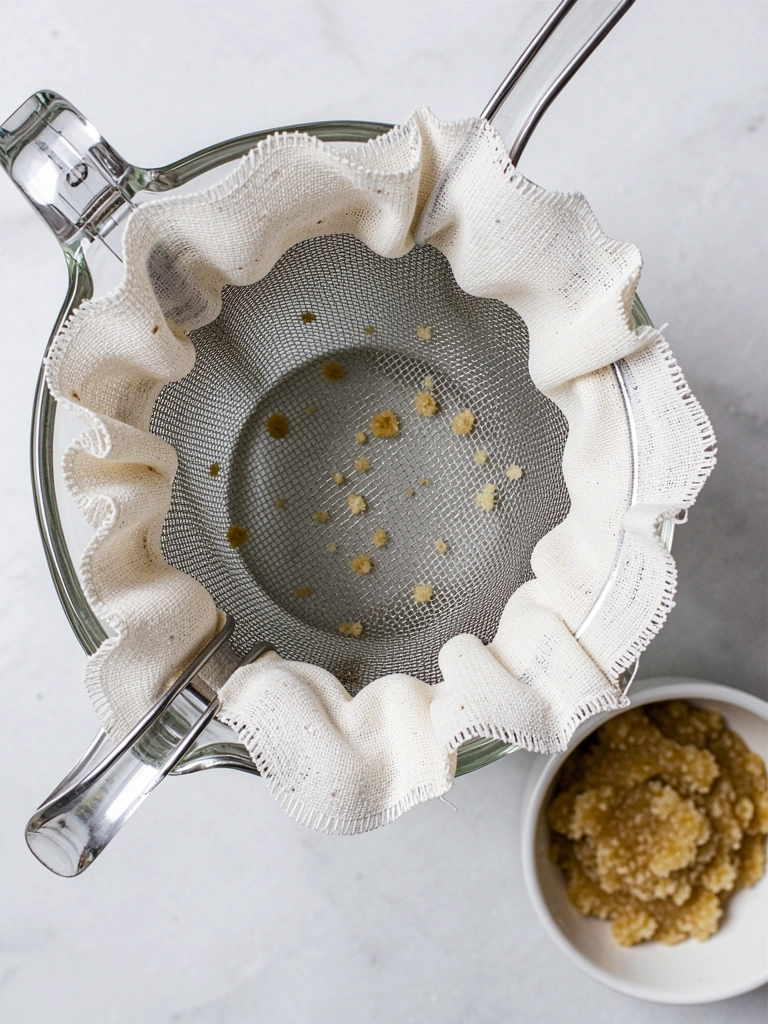
For clear juice: double strain—first through a coarse sieve, then through fine-mesh lined with cheesecloth. Refrigerate briefly and skim foam before the final strain to improve clarity.
Use gentle pressure when pressing to avoid pushing fine particulate through. Patience (letting it drip) yields clearer juice than aggressive squeezing.
Storing, Shelf Life, and Safety
Store fresh, unpasteurized juice in airtight containers in the coldest part of your fridge (≤40°F / 4°C). Use within 3–5 days.
To extend shelf life, pasteurize at 160°F (71°C) for 1 minute and hot-fill into sterilized jars. Refrigerate after cooling. For long-term storage, freeze in freezer-safe containers, leaving headspace; keep up to 6 months.
Always smell and taste a small amount before serving. If it smells fermented or off, discard it.
Common Mistakes and Troubleshooting
- Overheating the juice: boiling flattens flavor—heat only to pasteurize if storing.
- Not cleaning equipment: residual pulp causes off flavors; rinse juicer or blender parts right away.
- Using only one apple type: can produce overly sweet or overly tart juice—mix varieties for balance.
If your juice is bitter, remove more cores next time. If it’s cloudy and you want clear juice, add an extra strain step and chill before straining.
Final Thoughts
You can make bright, delicious apple juice at home with simple tools and clear steps. Focus on clean fruit, the extraction method you have, and careful straining.
Try small batch tweaks—apple mix, slight lemon, or gentle pasteurizing—to match your taste and storage needs. Enjoy your fresh juice.