How to Make Boba Pearls From Scratch
You want chewy, glossy boba that hold up in tea. Making them from scratch is simple once you know the dough technique and cooking timings.
This guide walks you through exact measurements, visual cues, and the tools to use. You’ll learn how to make classic black tapioca pearls with consistent chew and color.
How to Make Boba Pearls From Scratch
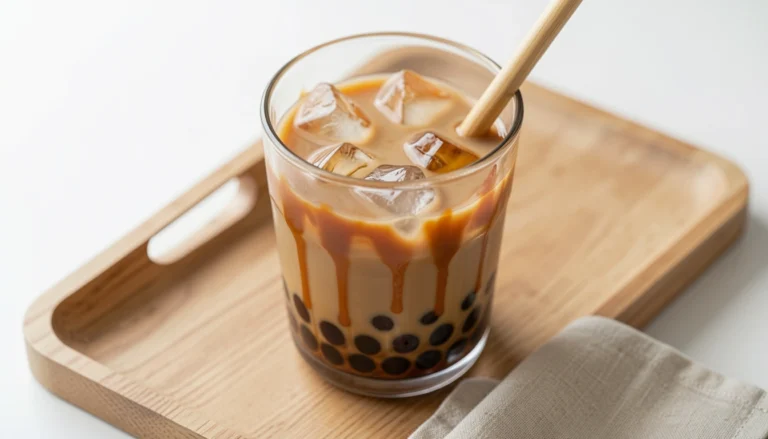
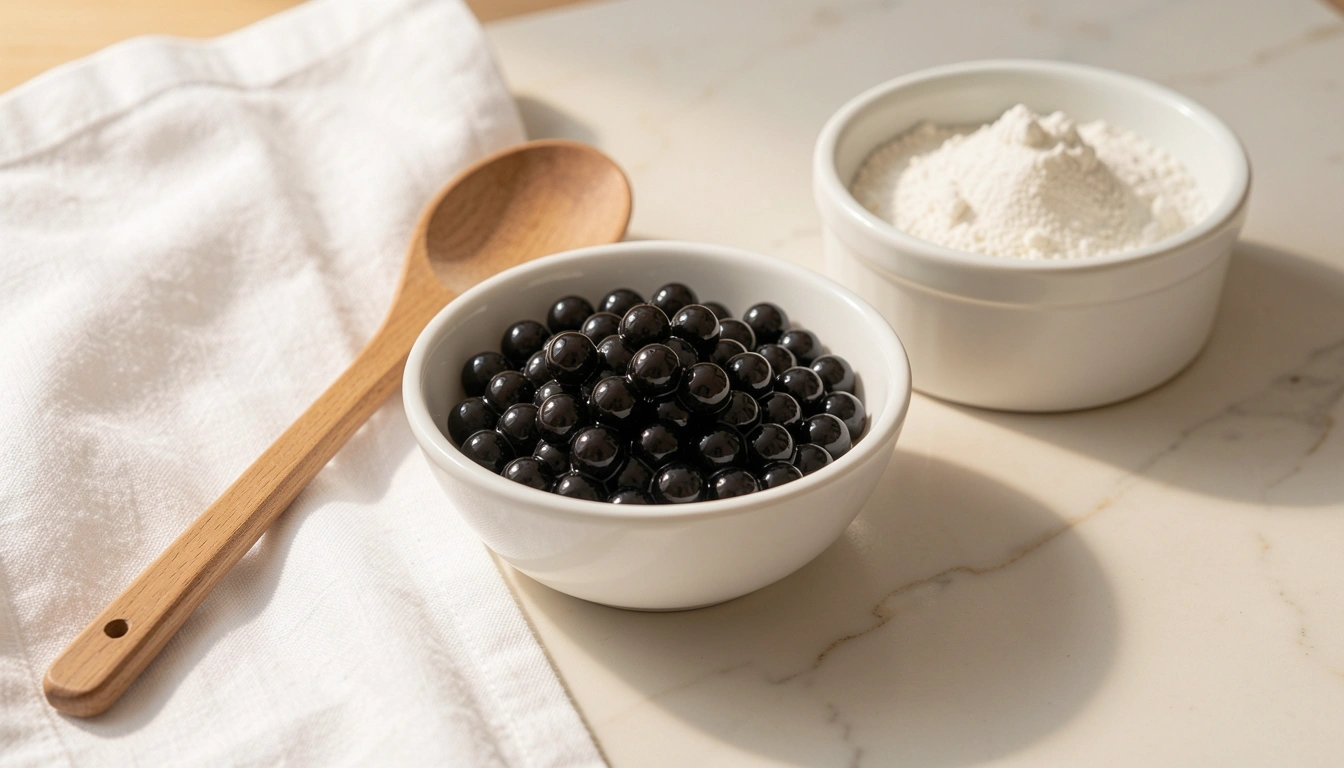
You’ll make small, chewy tapioca pearls colored with brown sugar. The finished pearls are glossy, slightly sweet, and springy to the bite — perfect for bubble tea or desserts.
Ingredients
- 1 cup (120 g) tapioca starch, plus extra for dusting — the starch gives the pearls their chew.
- 2½ tablespoons (35 g) dark brown sugar — adds color and flavor.
- 1/3 cup (80 ml) boiling water — hot liquid binds the starch into dough.
- 4 cups (1 L) water for boiling the pearls.
- Optional: 1 teaspoon molasses or blackstrap for deeper color (mix into sugar water).
Step-By-Step Instructions
Mix the sugar syrup and hot liquid
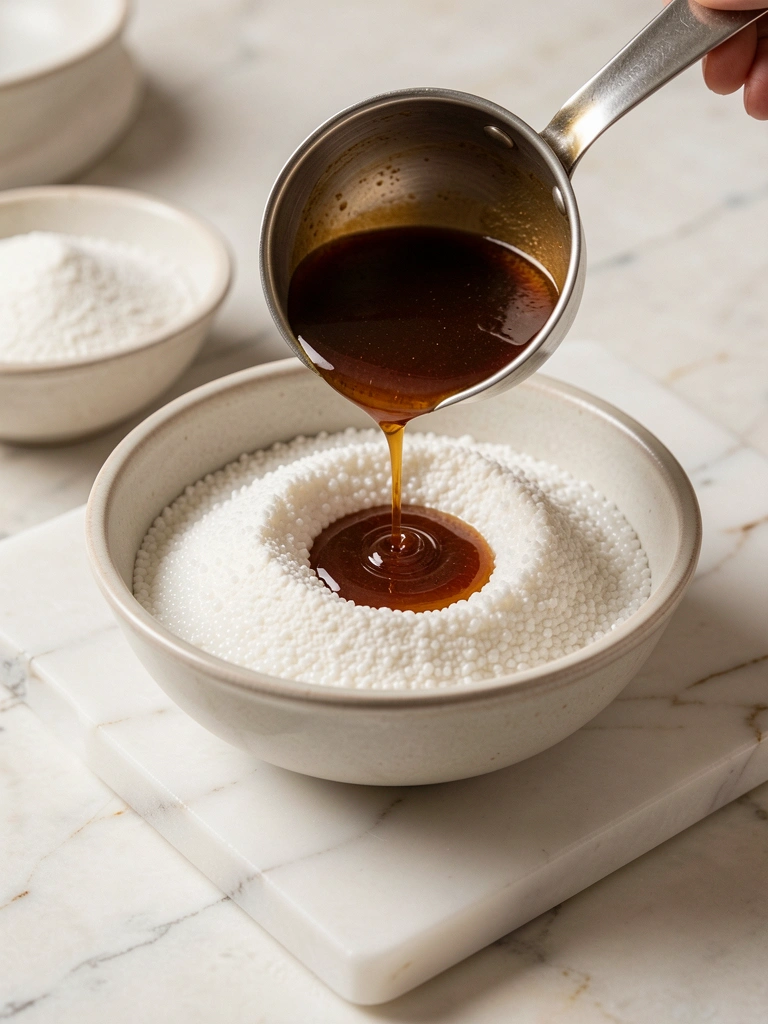
Combine the brown sugar and 1/3 cup (80 ml) boiling water in a small saucepan. Stir over low heat until the sugar fully dissolves and the liquid is very dark — about 1–2 minutes. This syrup provides color and flavor; hotter syrup blends more evenly into the starch.
Remove from heat. Let it sit for 20–30 seconds so it’s still hot but not vigorously boiling when added to the starch. Hot, not scalding, keeps the starch workable.
Form the dough
Place 1 cup (120 g) tapioca starch in a bowl. Pour the hot sugar syrup over the starch in a steady stream while stirring with a wooden spoon or silicone spatula. The mixture will clump quickly. Use your hands when cool enough (set a timer ~1–2 minutes).
Knead until smooth and pliable. If it’s crumbly, add a teaspoon of hot water at a time; if too sticky, dust with more starch. Aim for a soft, non-sticky dough that holds shape.
Shape the pearls
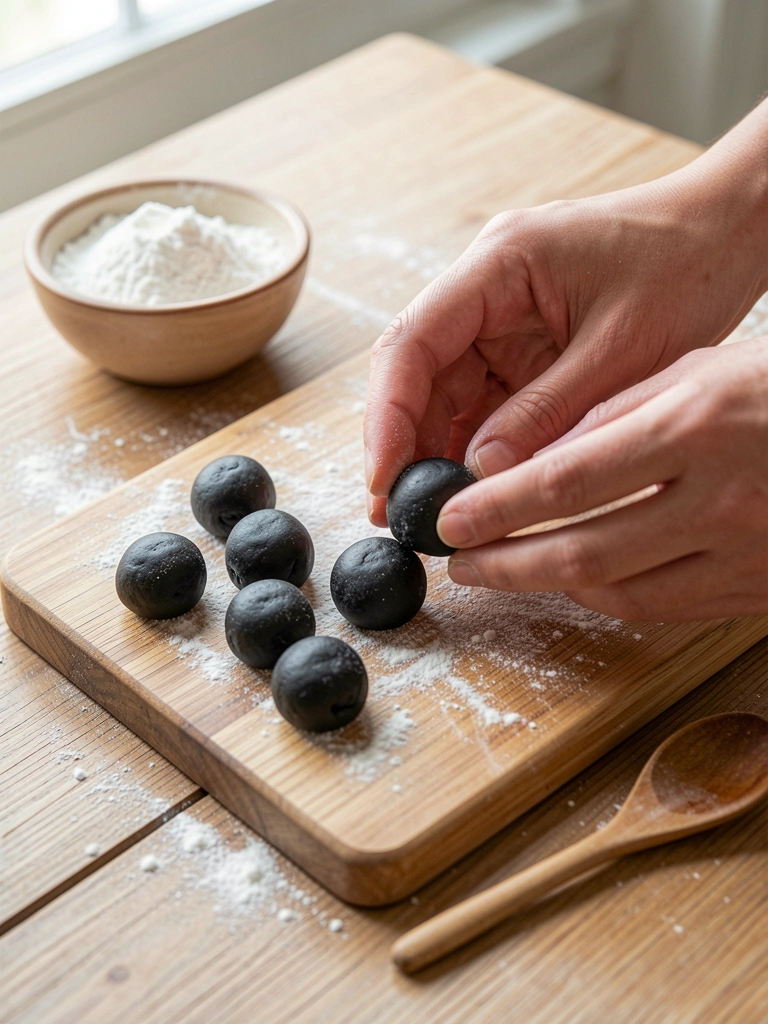
Pinch off small pieces (about 6–8 mm diameter) and roll between your palms into tight balls. Work quickly to avoid drying; dust lightly with starch to prevent sticking. For uniform cook time, keep pearls similarly sized.
If you want uniform pearls, use a small melon baller or syringe cutter, then roll gently on a floured surface.
Boil the pearls
Bring 4 cups (1 L) water to a rolling boil in a wide pot. Add the pearls in batches so they float freely. Stir gently for the first 30 seconds to avoid clumping. Boil uncovered for 12–15 minutes over medium-high heat, then cover and let sit off-heat for 10–12 minutes (residual cooking).
Cooking time gives the pearls their translucent edges and chewy center. Test one after the sit: it should be fully translucent with a slight opaque core that softens when rinsed.
Rinse and sweet-soak
Drain pearls with a sieve and rinse under cool running water to stop cooking and remove excess starch. Transfer to a short sugar syrup (2 tbsp sugar dissolved in 2 tbsp warm water) and let sit 5–10 minutes — this adds shine and a bit of sweetness.
Serve within a few hours for best texture. If they harden, reheat briefly (see Storage section).
Final texture check
Taste a pearl: it should be springy with a slight chew, not gummy or mushy. If undercooked, boil 2–3 more minutes; if gummy, you likely overcooked or used too much water — adjust next batch.
Common Problems and Fixes
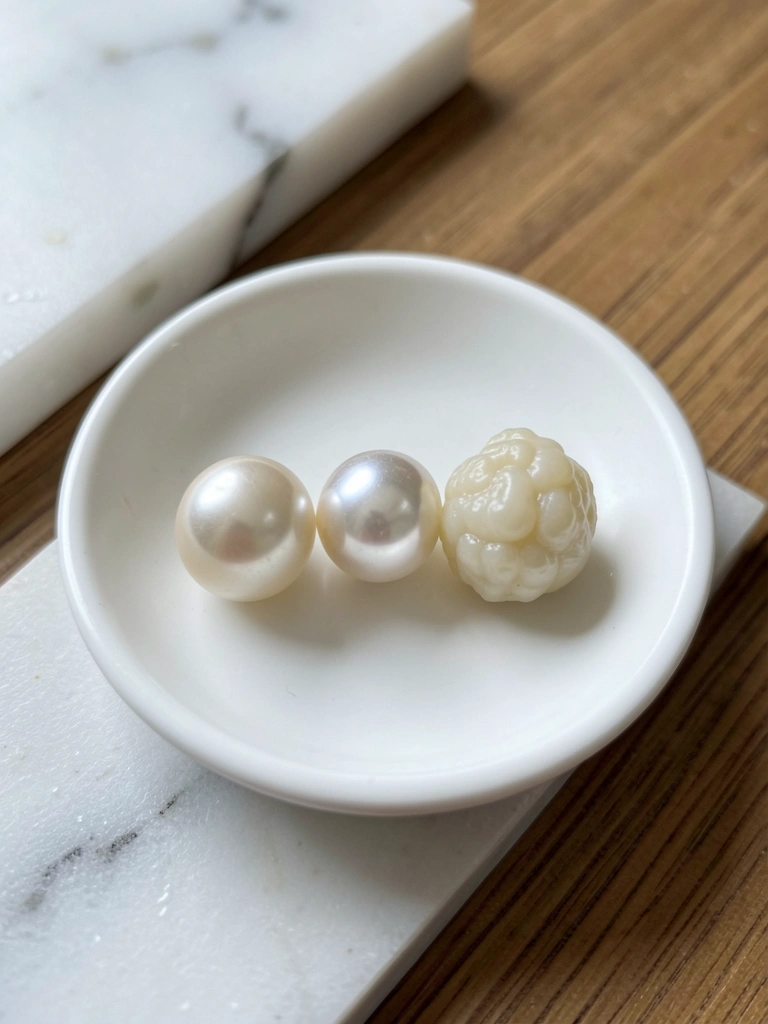
- Pearls are hard in the center: they need longer boiling and resting time; increase initial boil by 2–3 minutes and extend covered rest to 12 minutes.
- Pearls are gummy: you likely overcooked or used too much water in the dough. Reduce boiling time slightly or add a touch more starch when kneading next batch.
- Pearls stick together: roll in starch immediately and stir gently in the pot during the first 30 seconds. Rinsing in cool water helps separate them.
Troubleshoot by adjusting one variable at a time: cooking time, dough moisture, or pearl size.
How to Achieve the Right Chew
Use consistent size, accurate temperatures, and the sugar-syrup method for color. Small, even pearls cook uniformly; larger pearls take longer and can become gummy if left in hot water too long.
Knead until smooth but not sticky. The dough’s feel is your best cue: it should be pliable like playdough. Boiling in plenty of water prevents stuck-together pearls and uneven cooking.
Visual cues: pearls turn from matte to glossy and gain translucency around edges when cooked properly.
Storage and Reheating
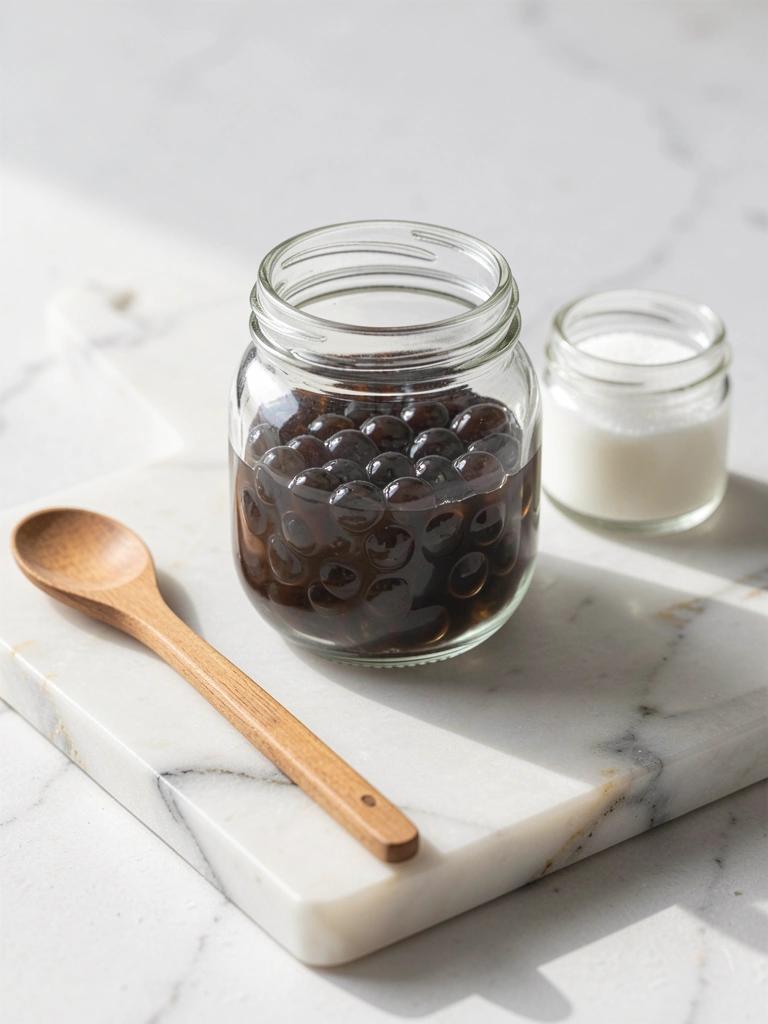
Store cooked pearls in sugar syrup at room temperature for up to 6 hours. In the fridge they firm and lose chew quickly; refrigeration is not recommended for best texture.
To revive slightly hardened pearls, simmer them in hot (not boiling) water for 1–2 minutes, then rinse and soak briefly in fresh sugar syrup to restore shine and softness. Avoid prolonged reheating, which makes them gummy.
Final Thoughts
You can make authentic, chewy boba pearls with simple pantry ingredients and accurate timing. Trust your hands: dough feel and visual cues guide success.
Practice size and cooking time once or twice, and you’ll get consistent results that hold up in drinks.