How to Make Beet Juice for Postpartum Iron Recovery
You just had a baby and you need simple, nourishing choices. Beet juice is a concentrated, earthy drink that can support postpartum iron recovery when made right.
This guide shows you exactly how to prepare a fresh, easy beet juice—what to add, how to strain, how much to drink, and how to store it safely for best nutrient retention.
Follow each step even if you’ve never used a juicer or high-speed blender before.
How to Make Beet Juice for Postpartum Iron Recovery
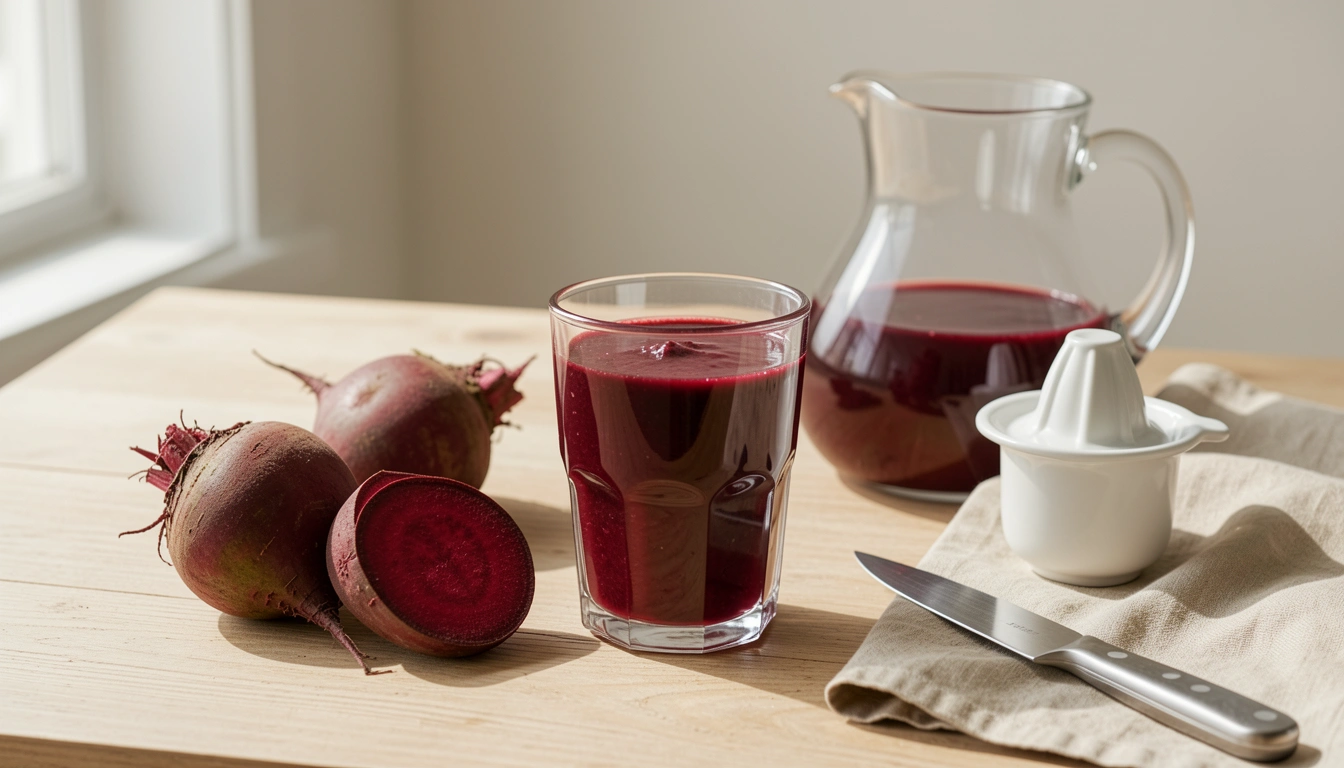
This recipe yields a smooth, bright-red fresh juice with an earthy-sweet flavor. It’s vibrant, lightly pulpy if strained, and balanced with citrus to help iron absorption. Serve chilled in small portions.
Ingredients
- 3 medium beets (about 500 g) — scrubbed, trimmed, peeled if you prefer less earthiness
- 1 medium apple (optional, for sweetness) — cored and quartered
- 1 small carrot (optional, milder sweetness and vitamin A)
- 1-inch piece fresh ginger — peeled (for digestion and flavor)
- 1/2 lemon or orange — juiced (adds vitamin C to boost iron absorption)
- 1/4 cup cold water (if using a blender) — adjusts consistency
- Pinch of salt (optional — enhances flavor)
- Ice and fresh mint (optional, for serving)
- Tools: juicer or high-speed blender, fine-mesh sieve or nut milk bag, cutting board, sharp knife, glass jar for storage
Step-By-Step Instructions
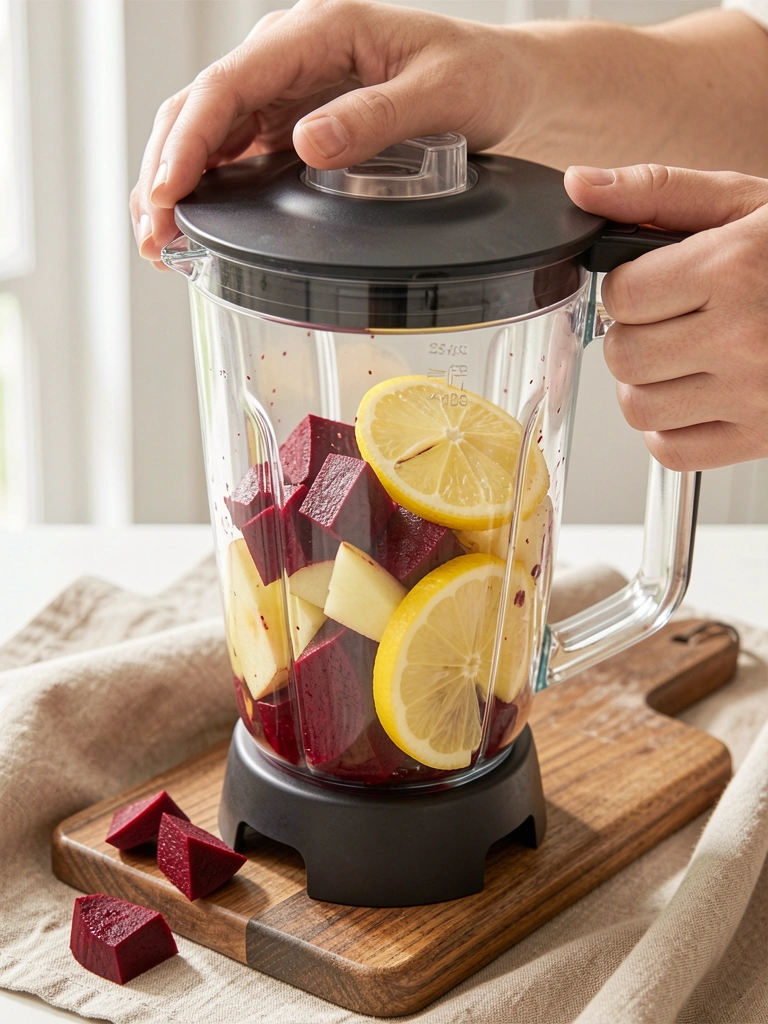
Prepare and clean the beets
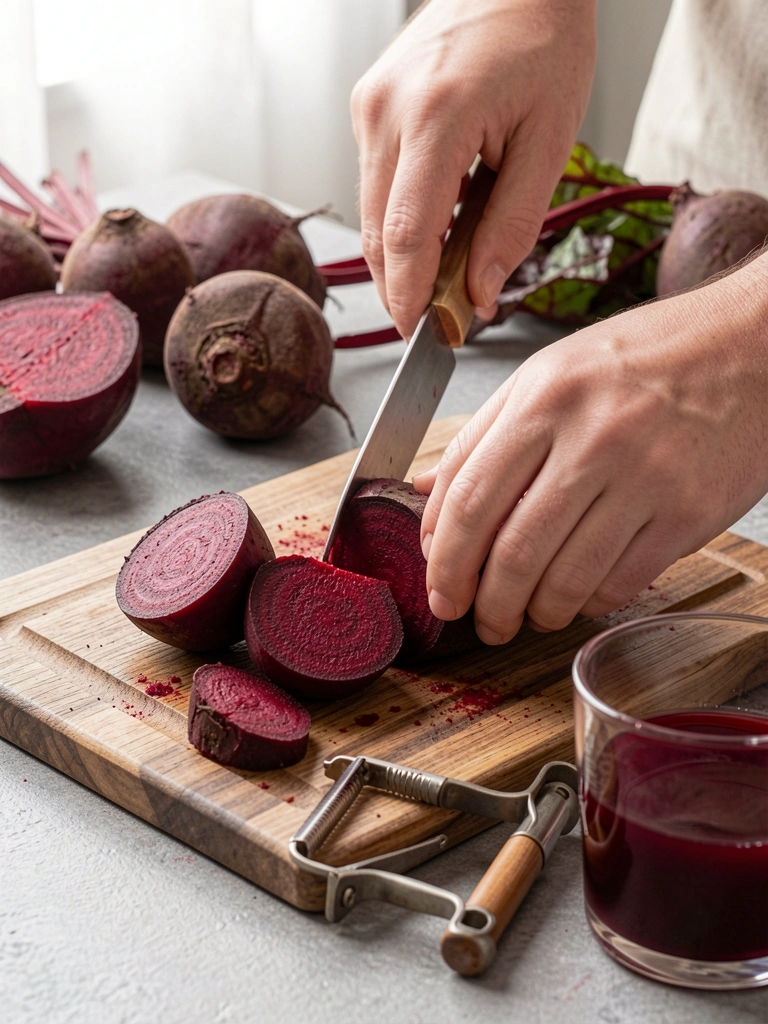
Wash beets thoroughly under cold running water to remove soil. Trim the tops and roots with a sharp knife. Peel if you dislike the earthy skin—peeling cuts bitterness and yields a smoother juice.
Why it matters: Clean, uniform pieces protect your juicer or blender and give an even extraction. Smaller pieces speed blending or juicing.
Cut to size and pre-treat
Cube beets into roughly 1-inch pieces for a blender, or slice to fit your juicer feed chute. If using a juicer, you can leave pieces slightly larger. Place citrus and ginger ready to press.
Timing cue: Chop in 5–10 minutes. Consistent size prevents motor strain and ensures even pulp release.
Juicer method: cold-press or centrifugal
Feed beet pieces, apple, carrot, and ginger through the juicer, alternating firmer and softer pieces. Finish by juicing the lemon or orange. Pour juice into a glass and stir with a pinch of salt if desired.
Why: A juicer gives the clearest, most concentrated juice. Cold-press retains more nutrients; centrifugal is faster but slightly more oxidized. Total juicing time: 5–8 minutes.
Blender method: blend and strain
Place chopped beets, apple, carrot, ginger, lemon juice, and 1/4 cup cold water in a high-speed blender. Blend on high 45–60 seconds until smooth. Pour through a fine-mesh sieve or nut milk bag into a bowl, press or squeeze to extract liquid.
Why: Blending is practical without a juicer. Straining removes fibrous pulp for a smoother drink. Expect 4–6 minutes active time.
Adjust flavor and cool
Taste and add more citrus if too earthy. Chill with ice or place in fridge 10–15 minutes before serving. Serve 4–8 ounces per portion.
Visual cue: Bright, deep red with a slight foam on top means fresh extraction. Serving chilled improves palatability.
Clean and store
Rinse the juicer/blender parts immediately after use to prevent staining. Transfer juice to a clean glass jar, cap tightly, and refrigerate.
Why: Prompt cleaning avoids beet stains and makes parts easier to clean. Proper storing preserves nutrients and freshness.
Why Beet Juice Helps Postpartum Iron Recovery
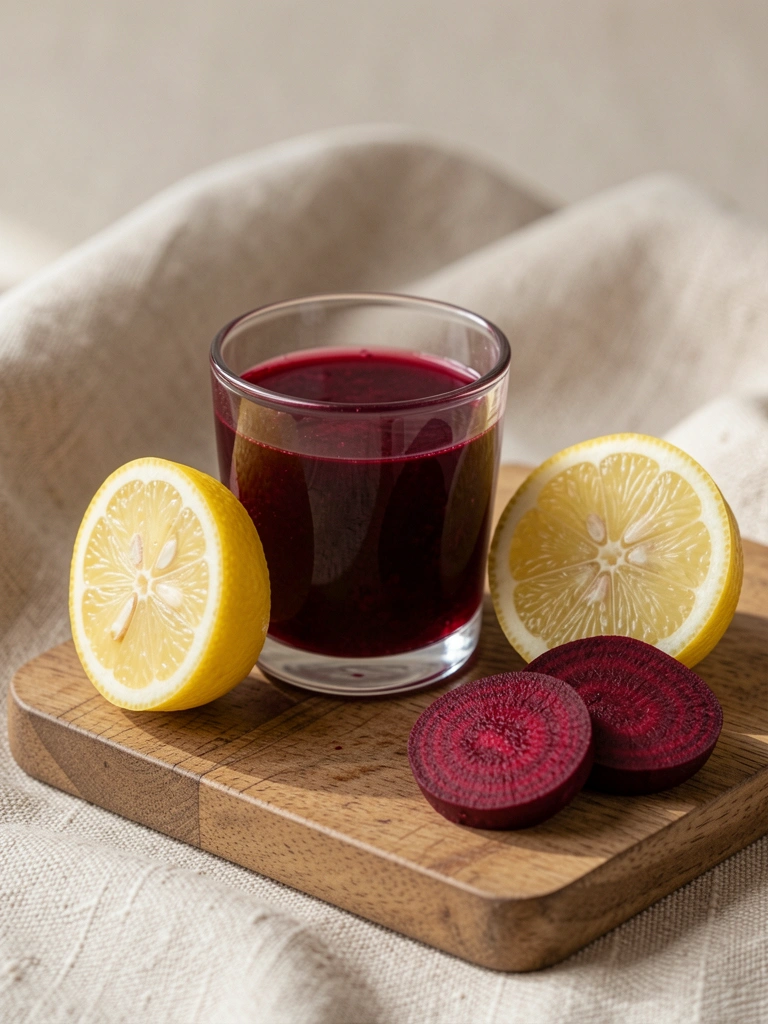
Beets contain modest iron plus folate and nitrates; combined with vitamin C from citrus, they help your body use non-heme iron more effectively. The juice concentrates these nutrients in an easily digestible form.
You won’t replace iron tablets with juice alone. Instead, think of beet juice as a nutrient-rich complement to iron-rich foods or prescribed supplements.
Choose citrus with the juice every time—this small pairing meaningfully improves iron absorption from plant sources.
How Much to Drink and When
Drink 4–8 ounces (120–240 ml) once daily to start. If you tolerate it well, up to two small servings daily is reasonable for most people. Start with smaller amounts to check for sensitivity or beeturia (pink urine).
Have juice with meals or alongside iron-rich foods to maximize absorption. Avoid drinking very large quantities at once—beet juice is concentrated in natural sugars and nitrates.
Listen to your body and track any changes. If you experience stomach upset or unusually low blood pressure, pause and discuss with your care provider.
Storage and Keeping Nutrients
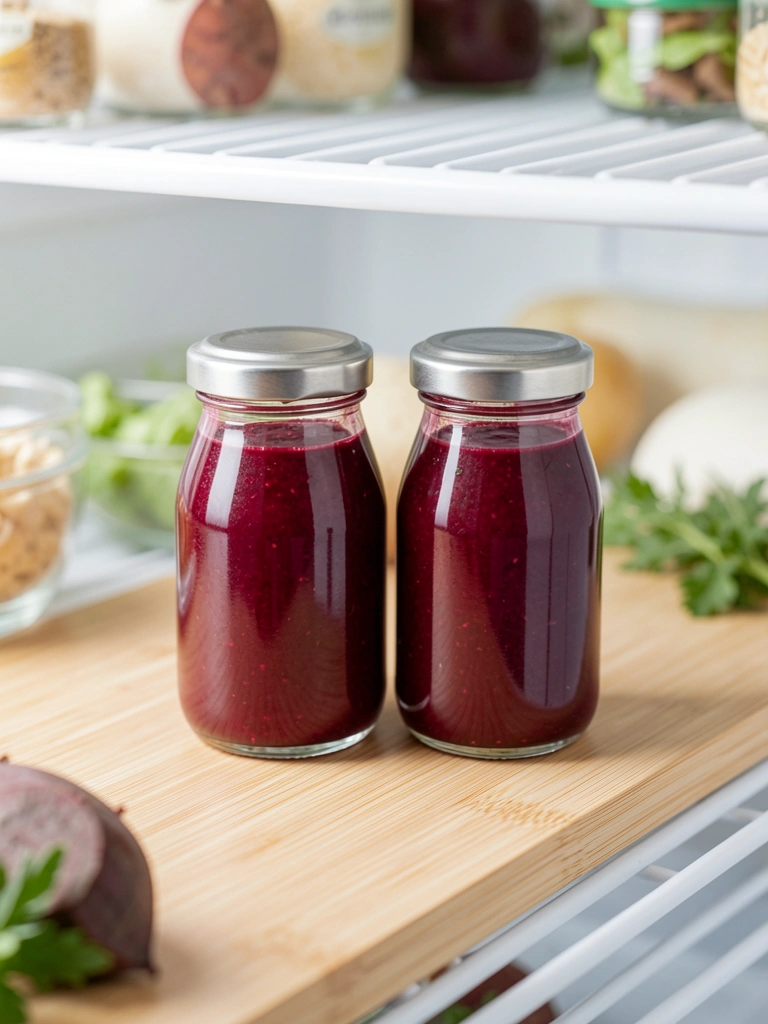
Store fresh beet juice in an airtight glass jar in the fridge for up to 48 hours. Fill the jar to the top to reduce air exposure and place it on a middle shelf where temperatures stay steady.
For longer keeping, freeze juice in ice-cube trays for up to 3 months. Thaw in the fridge and consume within 24 hours. Avoid reheating—heat accelerates nutrient loss.
Always shake or stir before serving; separation is natural. Use glass, not plastic, to preserve flavor and reduce off-tastes.
Final Thoughts
Beet juice can be a practical, nutrient-dense drink to support postpartum iron recovery when paired with vitamin C and a balanced diet. Make small batches, start slowly, and store correctly for best results.
If you’re on iron medication, breastfeeding, or have health concerns, check with your provider for personalized guidance. You’re doing a great job making mindful choices for recovery.